


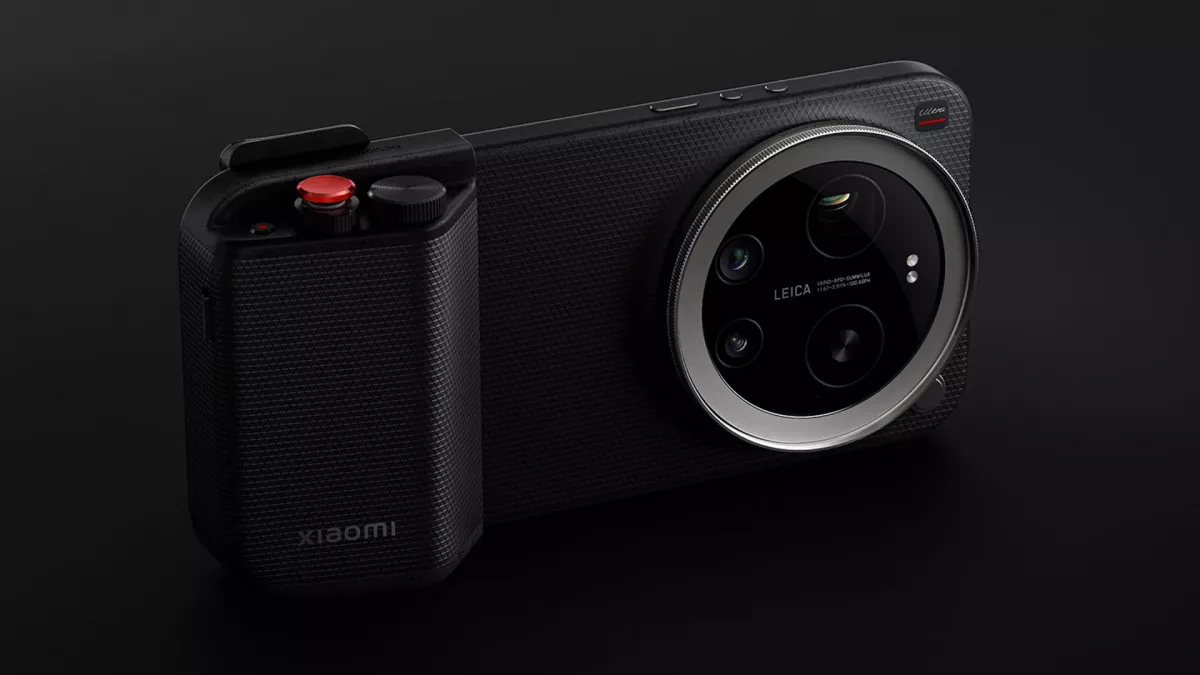
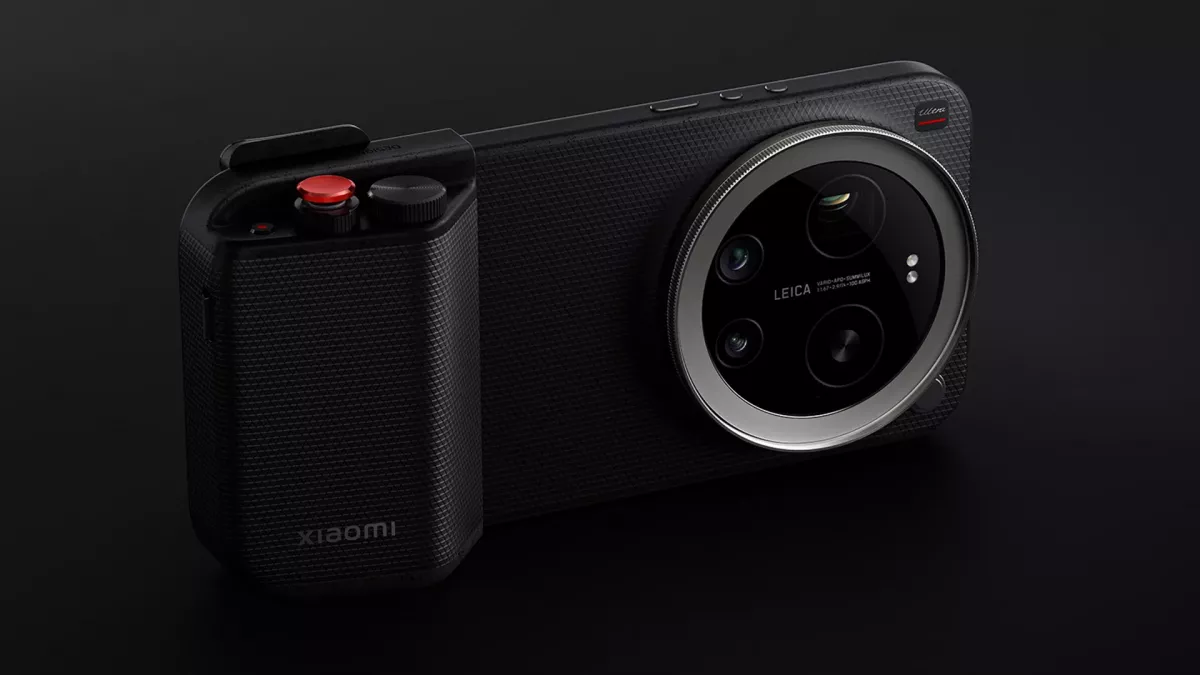
This year instead of your phone asking you, ‘What do you want?’ you need a phone that knows ‘how’ to do it for you. This is the shift you can see in smart devices that have autonomous AI agents, and the top fight is between the Samsung Galaxy S26 Ultra vs Xiaomi 17 Ultra. Samsung has an ecosystem of seamless AI, whereas Xiaomi is all about hardware-driven AI.
The review below will help you decide where you can put your money.
Performance & 2nm chips
Both devices come with a new generation Qualcomm 2nm class Snapdragon 8 Elite Gen 5 processor. Samsung has introduced its variant "For Galaxy" that focuses on maximizing NPU performance in Galaxy AI. In terms of performance, both offer equal experience, as apps launch right away and games load on maximum graphics and without any delay.
While Samsung’s main selling point is the consistency provided by superior cooling, allowing users to play games and record videos using DeX longer, Xiaomi decided to include extra RAM and a more efficient cooling system into their 17 Ultra model.
Verdict: S26 Ultra is not “slow”; Xiaomi just feels a bit more aggressive under load.
AI: Galaxy AI vs HyperOS AI
Galaxy AI 2.0 (Samsung)
Galaxy AI is privacy-focused and has leaning productivity.
• Live Translate / Live Call for calls and chats, which run mostly locally.
• Notes AI / Transcript Assist to convert talks into notes in Samsung Notes.
• The Bixby AI integration together with the S Pen and DeX capabilities will give the S26 Ultra a laptop-like feel.
Galaxy AI prioritizes local processing before cloud processing, which makes this feature set very useful for those concerned about their AI privacy.
HyperOS AI + AISP 2.0 (Xiaomi)
The theme of HyperOS AI revolves around computational photography.
•The AI system uses AISP 2.0 to combine information from the Leica 1-inch LOFIC sensor and 200MP telephoto camera sensor for impressive low light and zoom photography.
•Generative AI technology for 8K video recording and stabilization requires extensive cloud computing power.
With the result that you get some out-of-the-world images, but more content is processed via Xiaomi servers than Samsung’s on-device Galaxy AI system.
AI verdict: Samsung for privacy and productivity; Xiaomi for creative imaging
Cameras: Stills versus Consistency
Based on technical specifications and real life usage of the cameras in these two smartphones, here’s a brief summary of their key differences:
- The Xiaomi 17 Ultra uses a 50MP Leica-type 1” LOFIC sensor as a primary camera, features a 200MP optical zoom for distance (telephoto) photography, and utilizes a second 50MP ultrawide camera for landscape photography.
- The Samsung Galaxy S26 Ultra utilizes a 200MP Isocell-type HP2 sensor as its primary camera, has two telephoto/focal range cameras (3x and 5x), and 50MP and 12MP camera and a very well-rounded set of software for image processing, including the Enhanced Samsung ProVisual Engine.
- As such, the Xiaomi is much better at capturing still images, has more accurate depth perception when shooting still images, has better low-light photography, and has incredible detail for close-up shots than the Galaxy.
- Conversely, Samsung has much better low-light auto-focus technology, makes it much easier to take photos by just pointing and shooting, and provides much more stable and predictable video than Xiaomi does.
Camera conclusion: You're an obsessed photographer? Choose Xiaomi. You value simplicity and quality in photos and videos? Choose Samsung.
Connectivity, 5G SA and eSIM
Both are fully loaded.
- 5G Standalone (SA) and NSA support across wide global bands.
- Wi‑Fi 7, BT 5.4, and UWB on most variants.
- eSIM on both; S26 Ultra often offers dual eSIM + nano‑SIM
If you plan to use travel eSIMs check out Lyca Mobile’s prepaid plans or SA‑ready 5G plans, both are future‑proof on connectivity.
Specs snapshot
| Spec | Galaxy S26 Ultra | Xiaomi 17 Ultra |
| Display | 6.9" QHD+ 120Hz AMOLED, ~2600 | 6.9" 120Hz AMOLED, up to 3500 |
| Chipset | Snapdragon 8 Elite Gen 5 for Galaxy | Snapdragon 8 Elite Gen 5 |
| RAM / Storage | 12–16GB LPDDR6, up to 1TB | 16GB LPDDR6, up to 1TB |
| Battery / charge | 5000 mAh, ~60W wired | 6000–6800 mAh, 90W+ |
Final Verdict:
Buy the Samsung Galaxy S26 Ultra if:
- You value software support longevity (up to 7 years) and sleek design offered by One UI.
- You prefer privacy for your on-device AI and you make heavy use of your phone's Galaxy AI for work and educational purposes, including translation.
- You are an aficionado of S-Pen, DeX, and a flagship smartphone that feels light and well-balanced and acts as an AI mini-laptop.
Buy the Xiaomi 17 Ultra if:
- You are passionate about photography and need Leica 1-inch LOFIC optics along with AISP 2.0 technology to get the best still images and low-light images in this category.
- You prefer a bright display, larger battery, and 90W+ charging capability over being slim and lightweight.
- A cloud-oriented AI is okay for you because you prioritize excellent photography and video generation over other things.
Which has a better camera: Galaxy S26 Ultra or Xiaomi 17 Ultra?
In general, Xiaomi 17 Ultra’s camera is mostly better than the Galaxy S26 Ultra’s camera when it comes to still images. Xiaomi 17 Ultra’s Leica 1-inch LOFIC sensor with its AISP 2.0 pipeline has better detail, depth and low-light capabilities than Galaxy S26 Ultra HP2-class main sensor. However, Galaxy S26 Ultra usually wins for stability and reliability of auto-focus in videos.
Do both phones support eSIM and 5G Standalone?
Both the Galaxy S26 Ultra by Samsung and the 17 Ultra by Xiaomi come with eSIM support, and both are 5G SA capable. According to the official specifications and FAQs both devices have an eSIM option and then also support 5G SA/NSA with a large amount of Sub‑6 coverage, but for the Xiaomi, be aware there are potentially some region-specific variants where an eSIM may not be supported, so confirm this with your carrier for more details.
Which phone offers better AI privacy?
Galaxy S26 Ultra gives improved privacy in AI technology.
Samsung emphasizes its Galaxy AI technology as being device-first and includes options like the AI-driven Privacy Display and utilizes cloud computing only in select operations that involve opting in. Xiaomi's HyperOS AI and AISP 2.0 rely on cloud-based computing significantly for advanced photography and generation effects.
Is the Xiaomi 17 Ultra available globally?
Yes, Xiaomi 17 Ultra is launching globally in 2026.