


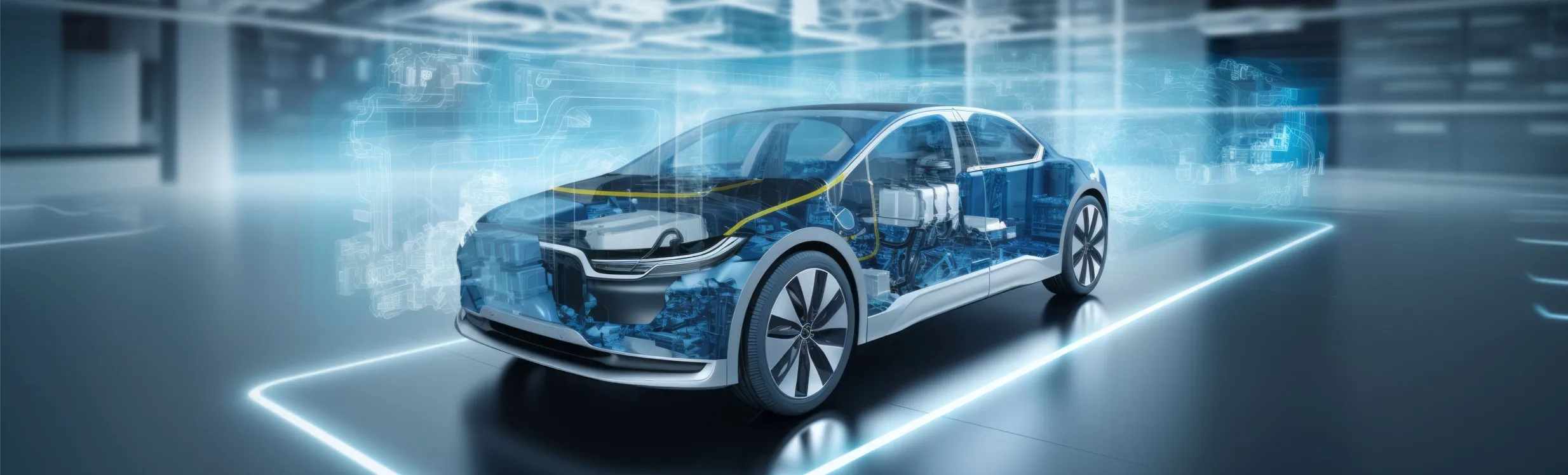
For years, Poland’s ambition to build its own electric vehicle was seen as a symbol of unfulfilled promises. The ElectroMobility Poland (EMP) state-backed venture and its initially announced Izera brand were supposed to herald a new era for the Polish automotive industry. However, consecutive delays, shifting concepts, and political debates left many citizens viewing the project more as a marketing stunt than a viable industrial roadmap.
Today, the landscape has completely changed. The Polish government, alongside the Ministry of Climate and Environment, the National Fund for Environmental Protection and Water Management (NFOŚiGW), and EMP, have announced a radical new phase for the country's e-mobility sector. This is no longer just about launching a single electric car model. The stakes are much higher: building an entirely new branch of national industry—spanning from research and development (R&D) and localized component manufacturing to sovereign technological competence and exporting next-generation vehicles across Europe.
At the heart of this strategy is the Polish Electromobilility Hub in Jaworzno (Silesian Voivodeship), backed by a massive PLN 4.5 billion (€1.05 billion / $1.15 billion) equity investment funded directly by the European Union's National Recovery Plan (KPO). The mega-project outlines the creation of a state-of-the-art manufacturing plant, an advanced R&D center, and a comprehensive industrial park dedicated entirely to e-mobility.
Poland Demands More Than a "Low-Cost Assembly Plant"
A recurring dilemma has plagued the Polish automotive debate for decades: Is Poland destined to remain merely a low-cost contract manufacturing backyard for foreign corporations, or can it become an innovation leader with its own technologies and global brands?
This exact point was heavily emphasized during the unveiling of the revamped e-mobility strategy. The Minister of State Assets, Wojciech Balczun, categorically stated that the objective is not to build another assembly line for a foreign entity. Instead, the focus is on genuine technology transfer, competency building, and fostering Polish intellectual property (IP) that will allow future generations of EVs to be designed natively. Wojciech Balczun underscored that this is a conscious, strategic investment mapped out for the next decade, rather than a short-term political PR campaign.
This represents a paradigm shift compared to the industrial investments seen in Central and Eastern Europe over the last thirty years. While Poland successfully became a major European manufacturing hub for foreign automotive giants, the highest-value segments—product design, platform development, proprietary patents, and core R&D centers—remained strictly anchored in Western Europe, Asia, or the US. E-mobility offers a historic window of opportunity to reverse this trend.
Why E-Mobility is a Macroeconomic Imperative for Poland
The automotive sector has long been one of the cornerstones of the Polish economy. The country ranks among Europe’s largest producers of automotive components, with thousands of local enterprises embedded deep within the supply chains of global brands. However, the systemic vulnerability has always been the lack of a homegrown, globally recognized Polish vehicle brand.
The global transition to sustainable transport offers a blank slate. The automotive industry is currently undergoing its most disruptive structural shift in over a century. Internal combustion engines (ICE) are rapidly being phased out in favor of electric powertrains, with legacy manufacturers investing hundreds of billions of euros into unproven tech platforms, battery tech, and software architectures.
It is precisely during these rare historical inflection points that new market entrants have the highest probability of success. A decade ago, competing with established automotive titans seemed impossible. Today, the rules of the game have changed: success is no longer dictated by a century of mastery in combustion engineering, but rather by competencies in power electronics, software development, energy storage, and systems integration. Therefore, Poland’s EV project is far larger than a car; it is about mastering the core industrial competencies of tomorrow.
The Jaworzno Electromobilility Hub: A Green Ecosystem
The defining element of the venture is the construction of the Polish Electromobilility Hub in Jaworzno. Positioned in the industrial heartland of Silesia, it is designed to be one of the most technologically advanced manufacturing complexes in Europe.
The massive industrial footprint will encompass:
- A high-capacity electric vehicle manufacturing plant.
- A leading-edge Research & Development (R&D) center.
- Advanced technological infrastructure.
- A dedicated industrial park for tier-1 and tier-2 component suppliers.
- A robust localized supply chain (targeting a 70% local/EU content threshold).
- A specialized energy infrastructure powered largely by Renewable Energy Sources (RES).
The integration of green energy could prove to be the project's ultimate competitive edge. According to official declarations, state-owned energy giant Tauron will be directly responsible for the construction of dedicated utility-scale photovoltaic farms to power the entire industrial complex in Jaworzno.
This synergy is critical for several reasons. First, EV manufacturing—particularly battery pack assembly and advanced electronics—is highly energy-intensive. Second, the European market is increasingly scrutinizing the "embedded carbon footprint" of the entire production lifecycle. An electric vehicle manufactured using 100% renewable energy holds a massive commercial and compliance advantage in Western Europe. Finally, merging e-mobility with green utility grids perfectly aligns with Poland’s broader macroeconomic energy transition.
R&D as the Beating Heart of the Strategy
Under the new roadmap, the absolute priority is the expansion of the R&D (Research & Development) division, known locally as B+R (Badania i Rozwój). This is the arena where long-term technological supremacy in the modern automotive world is won or lost.
💡 Defining R&D (Research & Development) in the EV Era
R&D (Research & Development) refers to the systematic, creative, and investigative activities undertaken by corporations and scientific institutions to innovate and introduce new products and technologies, or significantly improve existing ones. In the automotive sector, this involves extensive market analysis, scientific research, software engineering, and the physical building and rigorous testing of prototypes prior to commercial mass production.
A modern electric vehicle is no longer just a mechanical machine; it is a sophisticated, rolling technology product integrating complex software, power electronics, battery management systems (BMS), artificial intelligence, and V2X (Vehicle-to-Everything) communication frameworks.
The R&D hub in Jaworzno will spearhead:
- The architecture and design of next-generation EV platforms.
- The development of advanced battery packs and thermal management systems.
- Embedded software engineering and over-the-air (OTA) update frameworks.
- Stress-testing prototypes under extreme environmental conditions.
- Implementing advanced driver-assistance systems (ADAS) and autonomous driving features.
- Maximizing powertrain energy efficiency.
According to official projections from ElectroMobility Poland, the R&D sector is scheduled to employ roughly 360 specialists by 2029, with a long-term strategy to expand the innovation hub to over 1,000 highly qualified engineers within the decade.
This is where the true, non-tangible value for Poland’s GDP will be generated. A factory building can be erected relatively quickly. Developing a highly skilled, localized ecosystem of technological competence takes decades. If Poland successfully establishes a world-class R&D anchor in Silesia, it will solidify its position as a primary node in the European e-mobility matrix.
Foxconn and the Mechanism of Technology Transfer
The new industrial roadmap will be executed in close strategic partnership with Taiwanese tech giant Foxconn, globally renowned as the primary manufacturing force behind Apple's iPhone. While an electronics contract manufacturer entering the automotive space may surprise traditionalists, it perfectly demonstrates how the automotive sector is converging with the consumer tech industry.
Foxconn brings unparalleled global expertise in:
- Advanced power semiconductors and microprocessors.
- Highly resilient global supply chain management.
- End-to-end industrial automation and advanced robotics.
- Smart-city infrastructure and ecosystem integration.
- Rapid, hyper-scale industrial deployment.
Government representatives and EMP executives emphasize that this partnership is designed to facilitate a genuine, structural transfer of technology into Poland. This addresses one of the heaviest criticisms faced by the legacy Izera project—namely, the risk that the Polish car would merely be a rebadged vehicle built entirely on outsourced foreign architecture. The new strategy focuses on absorbing this engineering know-how, ensuring that subsequent generations of vehicles can be designed and iterated autonomously on Polish soil.
Can Poland Successfully Launch a Global Automotive Brand?
This question naturally dominates every public forum on Polish industrial policy. Skepticism is high, and understandably so. The turbulent history of the Izera venture demonstrated how easily ambitious industrial goals can collide with political transitions, financial bottlenecks, and organizational hurdles. For years, internet commentary ridiculed the project as a permanent resident of PowerPoint presentations.
However, building an automotive brand from scratch is inherently a multi-decade endeavor. Even the world's most dominant legacy automakers required generations to establish their market footprint.
Today, Poland possesses a unique combination of structural advantages it never had before:
- A highly resilient, world-class manufacturing sector.
- A deeply mature, pre-existing domestic network of tier-1 and tier-2 auto component suppliers.
- A vast pool of exceptionally talented software engineers and technical university graduates.
- Direct, tariff-free access to the world's largest premium EV market: the European Union.
- Fully secured, non-dilutive capital backing via the KPO (PLN 4.5 billion).
- Exponential global demand for zero-emission vehicles.
- The overarching legislative tailwinds of the EU Green Deal.
The ultimate variable for success will be executive and political continuity. The automotive industry operates on 10-to-20-year cycles. This is why Minister Wojciech Balczun repeatedly stresses that the Polish Electromobilility Hub must be treated as a sovereign, long-term macroeconomic asset protected from short-term political cycles.
Unleashing the E-Mobility Multiplier Effect
The economic dividends of establishing a native EV sector extend far beyond the revenue generated from vehicle sales. A sovereign automotive industry acts as a massive industrial multiplier, catalyzing a vast, high-tech economic ecosystem:
- Domestically anchored gigafabries for battery cells and modules.
- Specialized power electronics and semiconductor assembly plants.
- Innovative automotive software development houses.
- Next-generation engineering laboratories and testing facilities.
- Advanced technical universities tailoring curricula to future mobility.
- High-tech hardware and software startups commercializing niche mobility patents.
This translates into thousands of high-wage, specialized jobs. It is an ideal economic cushion for the Silesian region as it navigates away from heavy coal mining and traditional carbon-intensive manufacturing. The green tech jobs created in Jaworzno can effectively absorb and retrain the highly skilled industrial workforce of the region.
Aligning with Europe’s Push for "Strategic Autonomy"
Poland’s sovereign EV initiative aligns seamlessly with the macro trends reshaping the entire European continent. The European Union has explicitly prioritized the concepts of "strategic autonomy" and supply chain re-shoring. The vulnerabilities exposed by the pandemic, global semiconductor shortages, and geopolitical frictions have proven that total reliance on external, primarily Asian, supply chains for critical technologies is an existential threat to European security.
Consequently, European member states are aggressively subsidizing:
- Localized semiconductor fabrication plants.
- Battery cell gigafactories.
- Renewable Energy Sources (RES).
- Comprehensive charging networks and smart grids.
- Industrial applications of Artificial Intelligence (AI).
- Sovereign R&D and innovation clusters.
Poland is leveraging this unique geopolitical and economic window to secure its own prosperous position in the new, decarbonized global economy.
The Gauntlet of Global Competition: Major Obstacles Ahead
Despite the robust financial backing and strategic pivots, the road ahead is fraught with monumental risks. The project must survive a highly volatile market environment characterized by:
- Intense, aggressive competition from global legacy automakers.
- Highly volatile raw material pricing for batteries.
- An unprecedented pace of technological obsolescence.
- Severe price wars driven by heavily subsidized, vertically integrated Chinese EV conglomerates.
- The immense difficulty of building global consumer trust in a completely new brand.
- Guaranteeing capital expenditure stability over a multi-year horizon before profitability.
The European EV market is rapidly becoming hyper-competitive. Chinese brands are scaling up their European footprints at an unprecedented velocity, offering feature-rich vehicles at highly aggressive price points.
To survive and thrive, the Jaworzno project must sharpen its unique value proposition. This will likely center around:
- A "Made in Europe" stamp guaranteeing zero supply chain disruptions and strict adherence to EU data privacy laws.
- A heavily localized supply chain minimizing import tariff risks.
- A measurably superior ESG profile, utilizing Tauron's direct solar grid connection to minimize embedded manufacturing emissions.
- Agility in software development, driven by localized talent within the R&D hub.
- Customizing vehicles perfectly tailored to the mid-market European consumer.
Seizing the Historical Window
The annals of Polish industrial history contain numerous ambitious engineering projects that never achieved commercial liftoff. However, the current transition is fundamentally different because the underlying global market itself is being completely rewritten. E-mobility breaks down the traditional barriers to entry, offering an unprecedented opening for nations that missed out on the 20th-century automotive boom.
Poland possesses the industrial muscle, the technical brains, and now the financial runway to execute. The ultimate test will be whether the nation can build a self-sustaining innovation ecosystem. If this project scales down into a mere assembly line for foreign blueprints, Poland will remain a prosperous but ultimately dependent subcontractor. If, however, the country successfully fosters its own R&D engine, secures its own IP, and continuously iterates next-generation vehicle technologies domestically, it will go down as the most successful and transformative industrial investment in modern Polish history. With the first serial cars scheduled to roll off the production line in 2029, the countdown to Poland's entry into the premier league of global automotive nations has officially begun.
❓ Frequently Asked Questions (FAQ) – The New Polish EV Project
1. Is the new Polish electric car still called the Izera? No. The Izera brand has been officially retired and shelved as a legacy concept that never progressed past the physical model phase. The new initiative, spearheaded by ElectroMobility Poland (EMP), will introduce an entirely new brand identity designed for global appeal. The brand name will be chosen via a national competition, and the vehicles will be marketed and sold throughout the European Union.
2. How is the Polish Electromobilility Hub funded, and what is the total budget? The project has secured a definitive funding package of PLN 4.5 billion (~€1.05 billion). These funds are fully backed by the European Union's National Recovery Plan (KPO) and have been injected as capital into EMP via the National Fund for Environmental Protection and Water Management (NFOŚiGW).
3. What is the exact production timeline, and when will the first cars hit the market? The official timeline states that all formal agreements and joint-venture frameworks with technological partner Foxconn will be finalized this autumn. Groundbreaking and construction at the factory site in Jaworzno will commence in the spring of next year. The first serial-production electric vehicles are scheduled to roll off the assembly line in 2029.
4. Why is the R&D (Research & Development) sector considered the project's critical path? Prioritizing the R&D center ensures that the vital intellectual property, software code, and engineering patents remain proprietary to Poland, preventing the site from becoming a low-value "foreign assembly plant." The hub will start with 360 engineering specialists by 2029, with a long-term goal of scale-up to over 1,000 engineers within the next ten years.
5. How will utility provider Tauron contribute to the project? Tauron is contracted to construct dedicated, utility-scale photovoltaic solar farms (RES) directly connected to the Jaworzno industrial park. This ensures that the manufacturing process is powered by clean energy, giving the vehicles a significantly lower embedded carbon footprint, which is a major competitive and regulatory advantage in the EU market.