


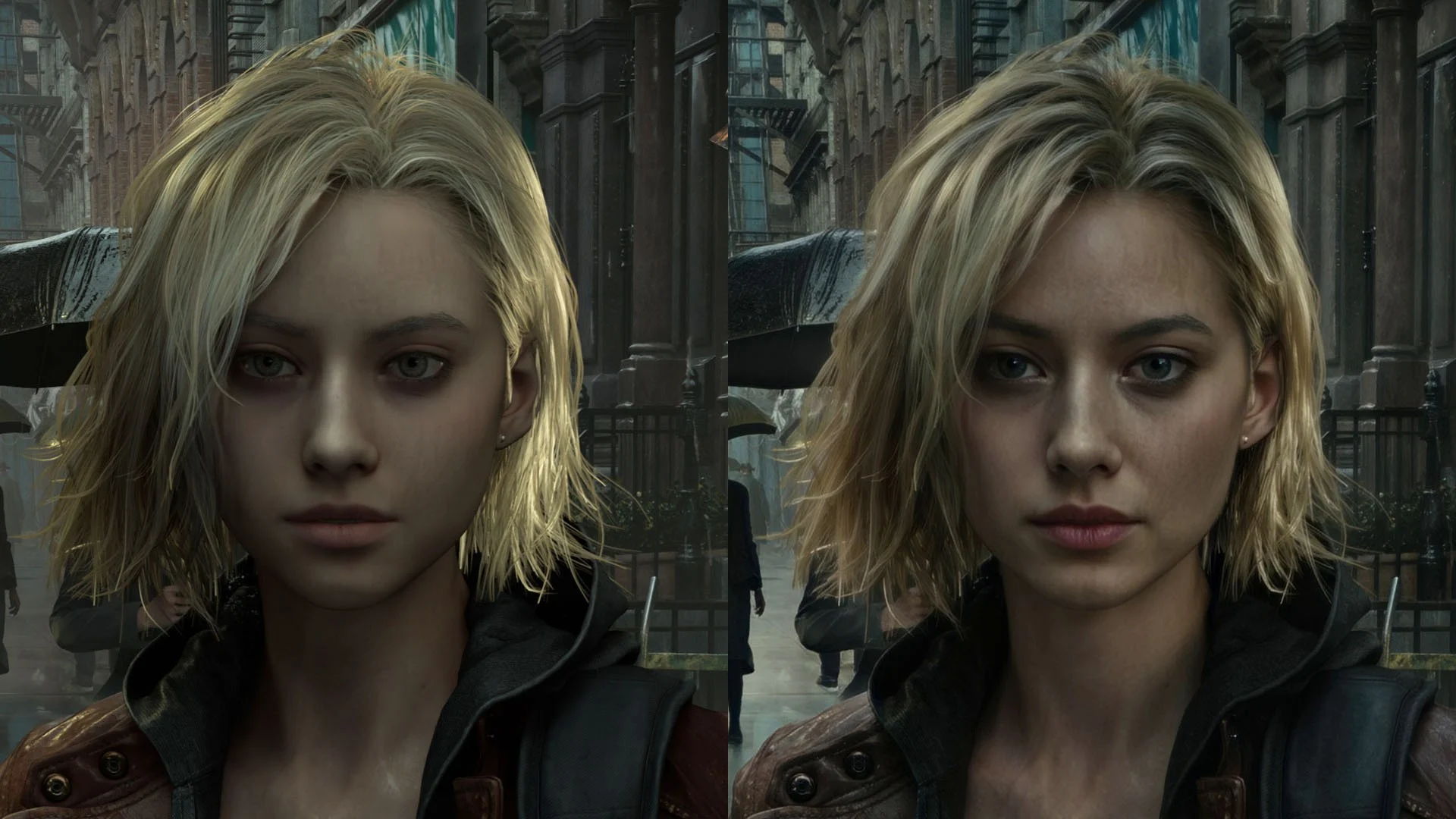
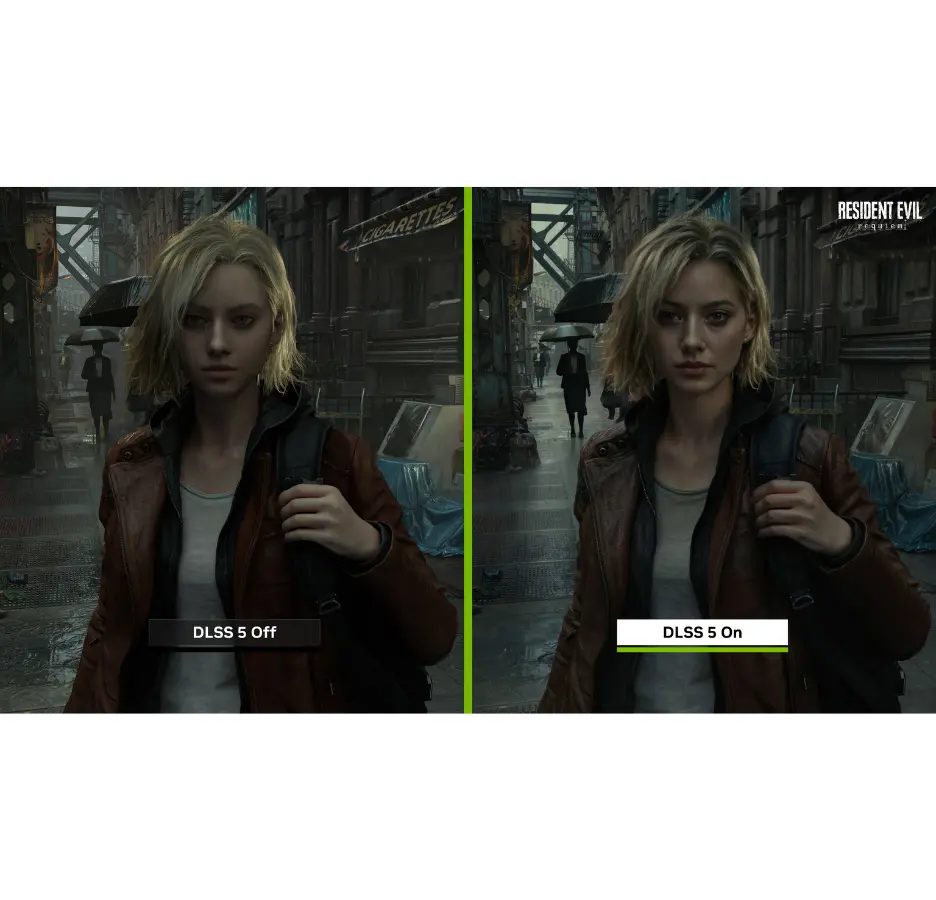
DLSS 5 is the biggest change in NVIDIA’s history since ray tracing - it shifts from image upscaling to neural rendering, where AI “understands” the scene and generates photorealistic lighting and materials in real time. PCMag’s tests show a massive boost in realism and depth, while TechRadar documents numerous controversies: players notice an “AI beauty filter,” altered faces, over‑bright lighting, and effects described as “yassification.”
What is DLSS 5?
DLSS 5 is neural rendering a technology in which artificial intelligence:
- analyzes the scene (colors, motion, materials),
- identifies objects (fabric, hair, skin, metal),
- generates photorealistic lighting, shadows, reflections, and micro‑details,
- and does all of this in real time, up to 4K resolution.
PCMag notes that this makes objects “look like real life” trees, rocks, water, interiors, and character skin gain dramatically more depth and realism.
How does DLSS 5 work?
Reads:
- color buffer (full color data),
- motion vectors (direction and speed of movement),
Recognizes scene semantics:
- skin
- hair
- fabric
- metal
Generates:
- photorealistic lighting,
- reflections,
- shadows,
- skin subsurface scattering,
- depth and textures.
According to PCMag, the technology “adds a new level of depth to objects and environments — rocks look real, characters look alive.”
Why is DLSS 5 so controversial?
TechRadar documented the most widely discussed cases that triggered a major online backlash:
Problem 1: Faces look like an “Instagram filter”
In several games (e.g., Resident Evil Requiem), characters appear:
- “smoothed out,”
- “brightened,”
- “beautified,”
- described by the community as “yassified, looks‑maxed freaks.”
Problem 2: Over‑bright lighting and blown‑out scenes
Users report cases of:
- interiors that are far too bright,
- shiny, glossy materials,
- unnatural reflections.
Problem 3: Changes to the game’s art direction
According to TechRadar, in some scenes DLSS 5 can look more like an AI filter imposing its own aesthetic rather than simply enhancing graphics — especially on character faces.
DLSS 3 vs DLSS 4 vs DLSS 5
| Feature | DLSS 3 | DLSS 4 / 4.5 | DLSS 5 |
|---|---|---|---|
| Main function | Frame Generation | Multi‑Frame Generation (up to 6×) | Neural Rendering |
| Priority | FPS | FPS + better SR | Visual realism |
| AI model | CNN + Optical Flow | Transformer SR | Large neural rendering model |
| FPS | Very high | Very high | Not focused on FPS |
| Realism | Moderate | Higher (2nd‑gen SR) | Very high (lighting, materials) |
| Art‑style change | No | Sometimes | Often visible (“AI filter”) |
| GPU support | RTX 40 | RTX 20 / 30 / 40 / 50 | RTX 50 (full) |
Games confirmed for DLSS 5
List confirmed across multiple online sources (OnMSFT, PCGuide, AltChar).
Below are the key titles appearing consistently across all lists:
| Game Title | Status |
|---|---|
| Starfield | confirmed |
| Hogwarts Legacy | confirmed |
| Resident Evil Requiem | confirmed |
| Assassin’s Creed Shadows | confirmed |
| Oblivion Remastered | confirmed |
| Phantom Blade Zero | confirmed |
Compatible GPUs (DLSS 5)
According to industry sources, full DLSS 5 support is exclusive to the GeForce RTX 50 series and its successors.
| GPU | DLSS 5 Status | Comment |
|---|---|---|
| RTX 5090 | Full support | Official demo GPU |
| RTX 5080 | Full support | High performance |
| RTX 5070 Ti | Full support | |
| RTX 5070 | Full support | |
| RTX 5060 Ti / 5060 | Unconfirmed / unlikely | |
| RTX 40 Series | Possibly partial, but unofficial | |
| RTX 30 / 20 | No support | Model too heavy |
Is DLSS 5 good?
DLSS 5 is great when:
- you care about realistic lighting and materials,
- you play single‑player, RPG, or cinematic games,
- you have an RTX 50‑series GPU capable of handling the AI model.
DLSS 5 may be bad when:
- artistic fidelity is important to you,
- you play stylized, comic‑like, or anime‑style games,
- you prefer natural visuals over “AI glow.”
DLSS 5 is the biggest visual revolution since ray tracing, but also the most polarizing NVIDIA feature ever.
FAQ
Is DLSS 5 just an AI filter?
No it is a neural rendering system.
However, in some games it may look like an “AI beauty filter,” as TechRadar confirmed.
Future DLSS iterations may reduce this effect as the models improve.
Does DLSS 5 increase FPS?
Indirectly it relies on DLSS 4 / 4.5 underneath, but its main purpose is realism, not performance.
Do characters look different with DLSS 5?
Yes. Tests in RE Requiem and Starfield show noticeable changes to faces and facial details.
Is DLSS 5 available on RTX 40?
No official confirmation the technology requires RTX 50‑series power.
Does DLSS 5 work in every game?
No it must be integrated by the developer (see confirmed games list above).
Is it worth turning on?
Yes for realistic, cinematic games.
For stylized titles depends on preference.
DLSS 5 is enormous, groundbreaking, and controversial.
On one hand, it delivers near‑cinematic realism.
On the other there are accusations of “AI slop,” face smoothing, and distortion of artistic style.
It’s a technology that will change the industry, but not always in ways everyone will appreciate.
Mobile internet for gamers and creators using technologies like DLSS 5
As technologies like DLSS 5 evolve — leveraging advanced AI models to generate photorealistic lighting, materials, and detail in real time — the demand for stable, fast, and flexible internet connections continues to grow. This is where Lyca Mobile Poland stands out, offering mobile internet and data plans perfectly suited to modern gamers, streamers, and mobile content creators. Thanks to 5G packages and flexible options for smartphones, tablets, and laptops with eSIM, Lyca Mobile delivers reliable connectivity not only for cloud gaming, but also for downloading large updates, graphic patches, or accessing gaming platforms while traveling. It’s a practical solution for people who want to stay online and enjoy high‑quality entertainment wherever they are.